- Rental+
- Services+
- Contact us

- Request a quote
Sensor, ND, stabilisation, audio and weight: the differences that matter on set, with Sony's data, to choose which Cinema Line camera to rent.
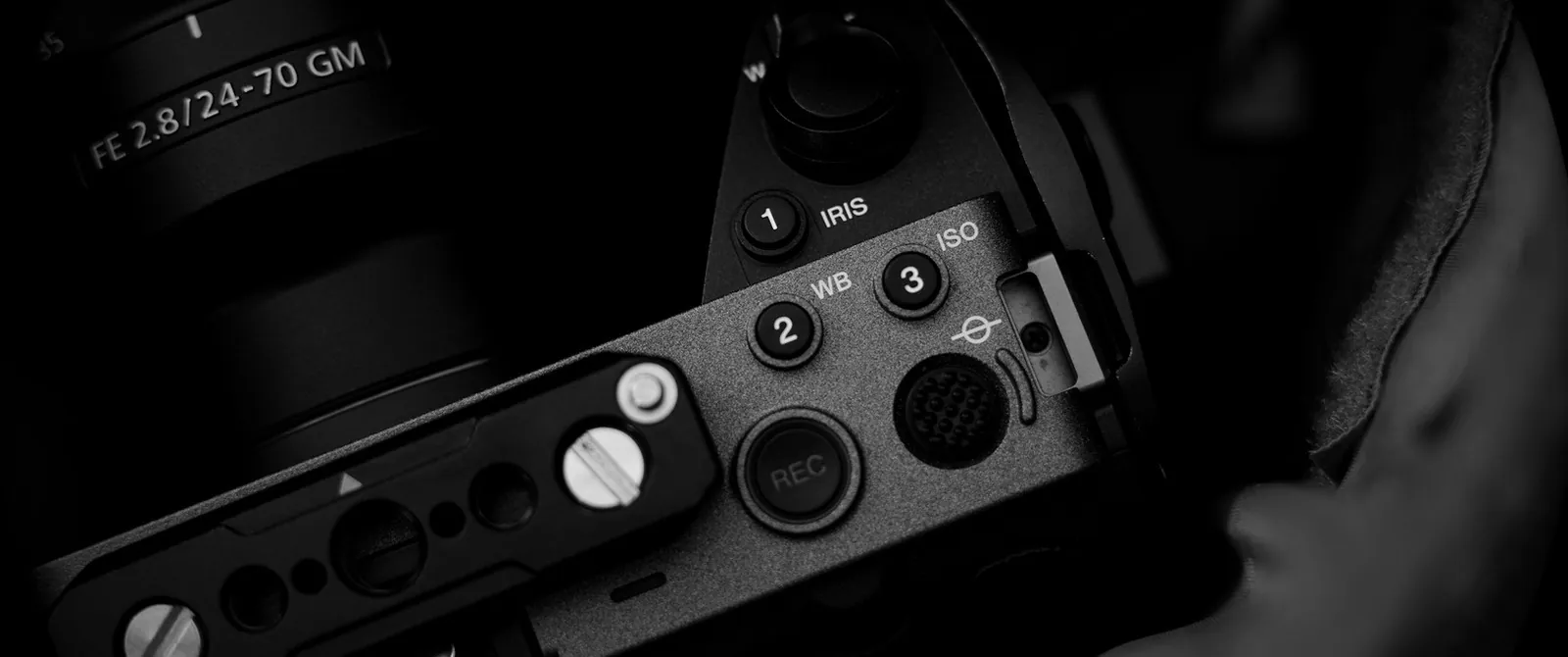
FX3, FX6 and BURANO belong to Sony's Cinema Line and have a lot in common: S-Log3 and the Cine EI mode with two base ISOs. What changes is the body, the weight and what each one already has on board.
This is how Sony presents them. The FX3 is the smallest and lightest in the family, designed for solo shooters working handheld, on a gimbal or on a drone. The FX6 is the full-frame camera for handheld work, documentary and sport. The BURANO is a CineAlta for a solo operator or a small crew, with the same sensor as the VENICE 2.
[[g:chooser]]
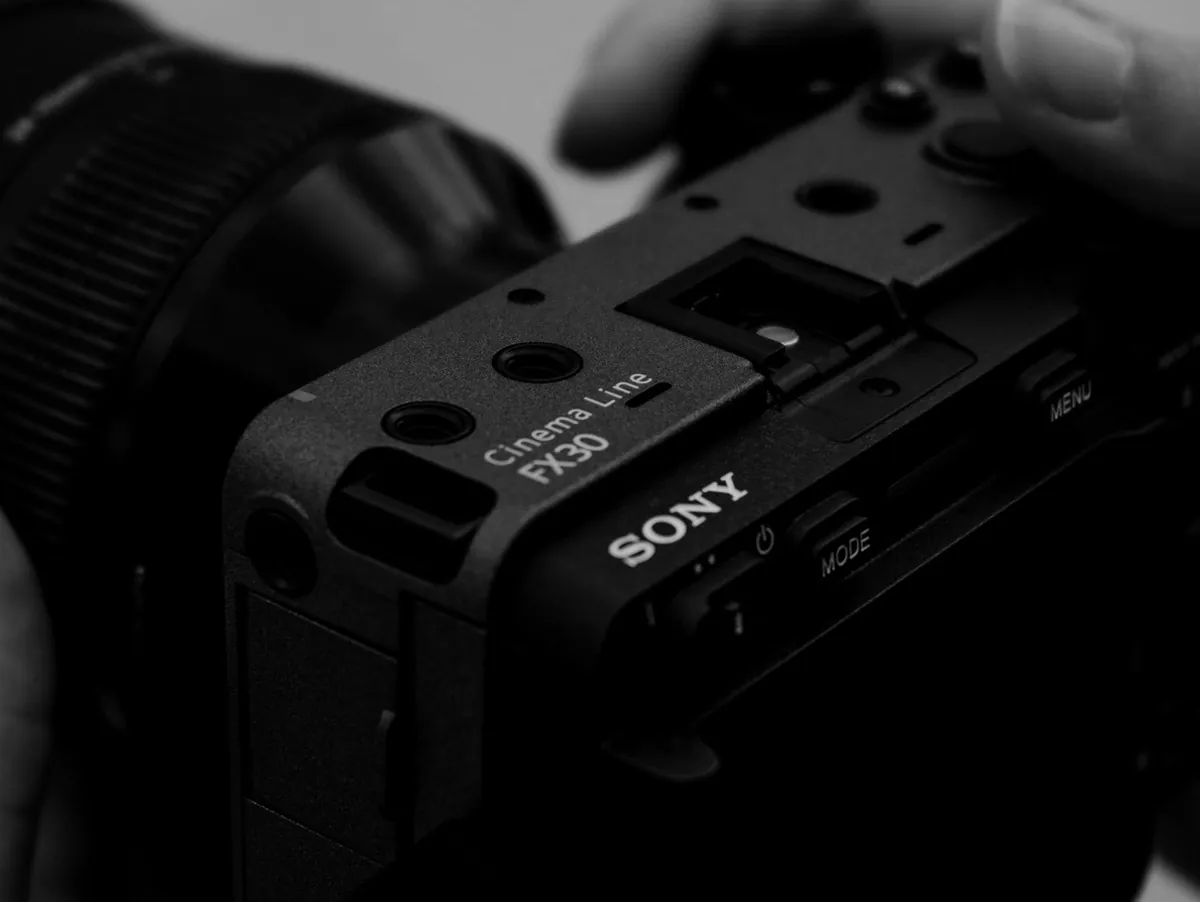
FX3 and FX6 have a full-frame sensor with about 10 effective megapixels in video, designed for 4K. The BURANO goes up to 8.6K on a 35.9×24 mm sensor, with many recording areas: full frame, cropped full frame, Super 35 and a 6:5 for 2x anamorphics.
In camera, FX3 and FX6 record XAVC up to 4K: the FX3 reaches 119.88p in XAVC HS and S, the FX6 120p in UHD. The BURANO also records Sony's RAW internally, 16-bit X-OCN LT: up to 8.6K at 30p, 6K at 60p and 4K at 120p.
On the two smaller cameras RAW goes through an external recorder. The FX3 sends a 16-bit RAW signal over HDMI, which an Atomos Ninja V records as ProRes RAW; since firmware 7.00 Blackmagic RAW is available too. The FX6 sends it over SDI or HDMI, with Blackmagic RAW over HDMI since firmware 6.00.
A detail that often surprises people: on FX3 and FX6 the Super 35 mode records in HD only. And at high frame rates the image is cropped: on the FX3 at 100 and 120p, on the FX6 in UHD at 100 and 120p.
All three cameras have two base ISOs in Cine EI mode. FX3 and FX6 work at 800 and 12800. The BURANO at 800 and 3200, with 16 stops of dynamic range claimed by Sony against the “15+” of the other two.
The difference you feel most on set is the ND filter. The FX6 has an electronic variable ND from 1/4 to 1/128, with an auto mode too. The BURANO goes from 0.6 to 2.1, that is from 1/4 to 1/128. The FX3 has no internal ND: outdoors you need filters in front of the lens, and since firmware 7.00 the camera only stores the value of the fitted ND in the metadata.
FX3 and BURANO have five-axis sensor-shift stabilisation. The FX6 does not: it relies on stabilised lenses. On the BURANO it also works with PL lenses, by entering the focal length by hand, from 8 to 1000 mm. Sony presents it as the first PL-mount digital cinema camera with both in-body stabilisation and autofocus.
The strongest mode has its limits. On the FX3, Active crops the frame and is not available at 100p and above or with the RAW output. On the BURANO, the Active and High modes work only in S35 5.8K and FFc 6K, never in X-OCN or in slow motion.
Mounts: FX3 and FX6 are E-mount. The BURANO comes with the PL mount fitted; removing six hex screws switches it to E-mount with a locking lever.
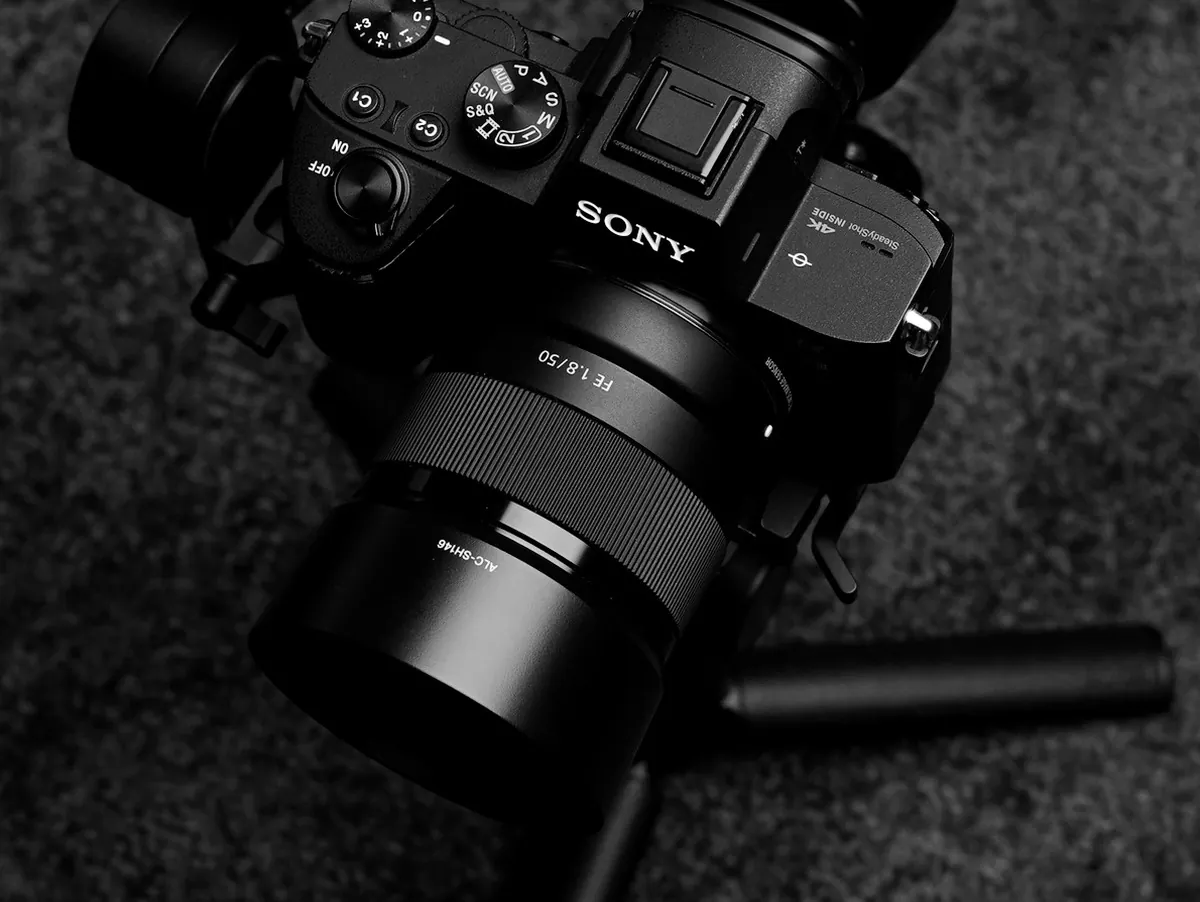
With anamorphics the FX3 de-squeezes 1.3x and 2x since firmware 3.00, and 1.5x and “1.6x”, which actually applies 1.65x, since 7.00; when it is on, autofocus and stabilisation are switched off. The FX6 has 1.3x, 2x and 1.5x, with no autofocus during de-squeeze. The BURANO goes up to 1.8x and has a full-frame 6:5 mode for 2x lenses. To choose the lenses, see the anamorphic lens guide.
The FX6 has everything in the body: two XLRs with phantom power, timecode in and out on BNC, 12G-SDI and HDMI. The BURANO adds genlock, a second 3G-SDI output and wired networking: it is the one designed for multicamera work.
The FX3 takes XLR audio from the supplied handle, with two inputs and four 24-bit channels. Timecode in, however, does not go through the handle: you need the VMC-BNCM1 cable on the Multi port. Timecode out travels only inside the HDMI signal, which is also the only video output, and there is no genlock.
All the data in one table, filtered by topic. On a phone you pick one camera at a time.
[[g:compare]]
[[g:products]]